AEGI delivers integrated multi-disciplinary engineering in Edmonton, Alberta. Coordinated civil, structural, mechanical, and electrical P.Eng designs.
What Is Multi-Disciplinary Engineering?
Construction projects today involve interconnected systems that must work together from day one. At Advanced Engineering Group Inc. (AEGI), an Edmonton-based professional engineering firm, we integrate civil, structural, mechanical (HVAC), and electrical engineering under one roof to reduce delays, cut costs, and improve project outcomes. Multi-disciplinary engineering is the practice of combining multiple engineering fields—civil, structural, mechanical, and electrical—into a single, coordinated design process. Instead of each discipline working in isolation and exchanging drawings periodically, all teams collaborate continuously from concept through completion. This reduces design conflicts, improves communication, and keeps cost and schedule under control across the full project lifecycle.
Why It Matters in Modern Projects
Structural design affects HVAC routing. Electrical layouts affect mechanical equipment placement. Civil grading affects drainage and foundation stability. When these disciplines aren't coordinated, the result is clashes, costly redesigns, change orders, and schedule delays. The more complex the project, the higher the cost of fixing a conflict discovered after construction has already started.
Key Benefits of Integrated Engineering
Integrated engineering delivers several clear benefits. Improved efficiency: early coordination reduces rework and shortens project timelines. Cost savings: conflicts caught during design avoid expensive changes during construction. Better design quality: integrated teams produce optimized systems where each discipline supports the others. And reduced risk: fewer surprises on site mean smoother, more predictable execution for everyone involved, from owners to trades.
Real-World Coordination Examples
Consider a few common scenarios. A structural beam placed without HVAC input can block a critical duct run, forcing costly field changes. An electrical room positioned without mechanical input can conflict with equipment access. And site grading that ignores building drainage can direct water toward the foundation. When disciplines coordinate early, these issues are caught on the drawing board, where they're inexpensive to fix, instead of in the field, where they disrupt schedules and budgets.
Overcoming Integration Challenges
Successful integration depends on consistent communication, shared data, and unified design intent. AEGI keeps all four disciplines—civil, structural, mechanical, and electrical—within one firm, using shared models and regular coordination so every team works from the same up-to-date design. This removes the gaps that occur when separate consultants exchange drawings only occasionally.
The Role of Technology in Coordination
Shared digital models, clash-detection tools, and Building Information Modeling (BIM) let every discipline see how its work fits within the whole project. Internationally, BIM information management follows the ISO 19650 series, which standardizes how project information is organized, exchanged, and version-controlled across disciplines and project stages. Coordinating within a shared model allows teams to resolve conflicts virtually, before materials are ordered or installed, improving both cost control and constructability.
A Single Point of Accountability
When civil, structural, mechanical, and electrical work is split across separate firms, responsibility for the interfaces between disciplines can become unclear. With all disciplines under one firm, there is a single team accountable for the complete design. For project owners, this means fewer gaps to manage and a clear point of contact for any issue that spans multiple disciplines.
AEGI's Approach
AEGI is a professional engineering firm based in Edmonton, Alberta, providing integrated civil, structural, mechanical, and electrical engineering services for industrial facilities and municipal infrastructure. Bringing all four disciplines together under one roof gives clients a single accountable team from concept through construction.
Synthesis & Outlook
“As construction projects grow in complexity, integrated engineering is the key to delivering efficient, cost-effective, and reliable results. By bringing civil, structural, mechanical, and electrical engineering together under one roof, AEGI gives clients a single accountable team—and a coordinated design—from concept through construction.”
References & Standards
Frequently Asked Questions
What is multi-disciplinary engineering?
Multi-disciplinary engineering combines civil, structural, mechanical, and electrical engineering into one coordinated design process instead of separate, siloed teams.
Why is multi-disciplinary engineering important in construction?
It reduces design conflicts, prevents costly rework, and keeps projects on schedule by catching coordination issues during design rather than during construction.
What disciplines does AEGI provide?
AEGI provides Civil, Structural, Mechanical (HVAC), and Electrical engineering services, including pipeline design within these disciplines.
Where is AEGI located?
AEGI is a professional engineering firm based in Edmonton, Alberta, Canada.
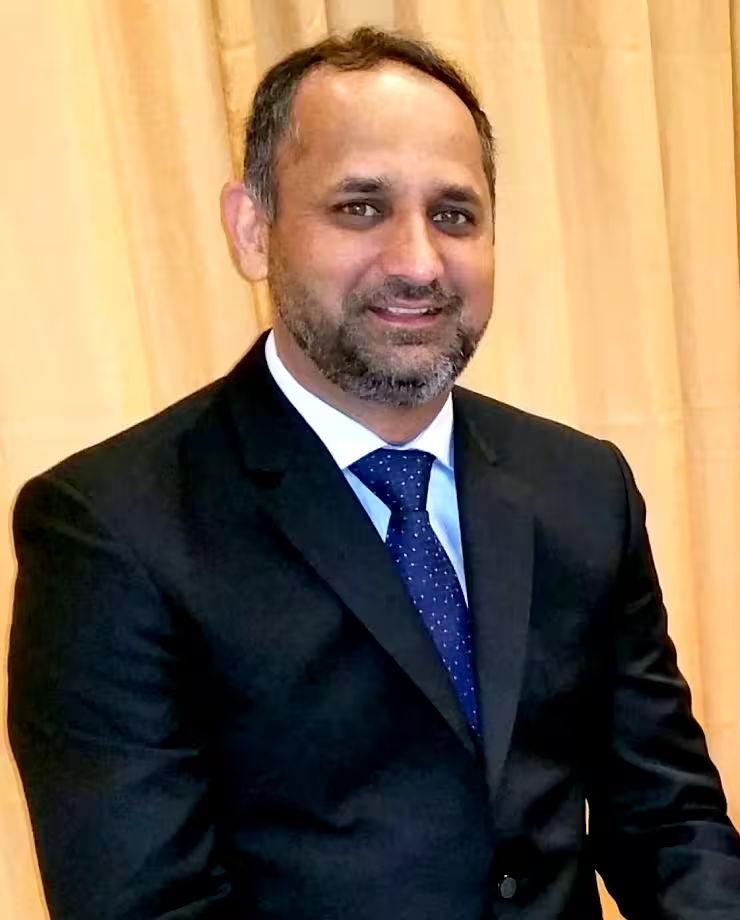
Adeel AbdullahP.L.(Eng.)
Adeel Abdullah is the founder, President, and CEO of Advanced Engineering Group Inc. (AEGI). As an APEGA-licensed professional licensee, Adeel brings nearly two decades of engineering leadership across Alberta, spearheading integrated multi-disciplinary engineering projects, regulatory municipal approvals, and major commercial and industrial infrastructure developments.